
So You Want to Go on Safari
It is hard to find a person who does not have an African safari somewhere on their list. Not just travelers. Everyone. It sits in the imagination in a specific way, built up over years of documentaries, photographs, and stories from people who came back changed. And when people finally reach a point where they can afford it, it is almost always one of the first calls they make.

The digital version of Reject Average Magazine is available free to read this and all other articles. If you want to read it as intended click here and subscribe to the digital version, no cost, no credit card, instant access.

So You Want to Go on Safari
Practical advice before booking one of the most expensive and potentially life changing adventures on earth.
It is hard to find a person who does not have an African safari somewhere on their list. Not just travelers. Everyone. It sits in the imagination in a specific way, built up over years of documentaries, photographs, and stories from people who came back changed. And when people finally reach a point where they can afford it, it is almost always one of the first calls they make. Which means getting it right matters enormously.
Because safari in Africa is also a business. A thriving, globally marketed, heavily sold industry subject to the same forces as any other. Salesmanship. Upselling. Folklore that does not always match reality. Knowing how to navigate it is the difference between a trip that lives up to everything you imagined and one that costs a fortune and leaves you wondering what you missed.
If you simplify it, there are really two questions you need to answer before booking anything.
Will I get the kind of animal encounters I have been dreaming about? And will it actually be worth the money I am spending?
The good news is both answers can be yes. But only if you approach it the right way.
After doing every major animal encounter available on the continent, across multiple countries and more experiences than I can count, here is what I actually know.

Proximity beats everything.
The first question most people ask when planning a safari is where. Open plains or private reserve. Tanzania or South Africa. Wild or fenced. And my answer is always the same. Before you decide where, decide what you actually value.
I have done a safari in the Serengeti, which is the definition of open, pure, untouched wilderness. And I have done a safari at a private game reserve in South Africa that is, technically, fenced. Here is what I can tell you.
Seeing cheetahs hunting on the Serengeti from half a mile away, which is genuinely wild, was not nearly as powerful as watching big cats eat and move and crawl around my jeep from five feet. That proximity, that intimacy with the animal, is what changes you. That is the story you tell for the rest of your life.
Are you comfortable driving hours between sightings or do you wantnon-stop action? There is no wrong answer here. Some people genuinely value the open expanse of pure wilderness more than the individual animal encounters, and that is completely valid.
But be honest with yourself about what you are actually after before you spend the money. If it's up-close animal encounters with the Big 5 or Top 12are your priority, don't leave it to chance. Be specific about what your goals are, then choose your safari based on your animal expectations, not the pretty brochure or view from the room.
"The safari industry has a significant gap between what you pay and what you actually get".
Price does not always buy a better experience.
This one surprises people, and it is probably the most valuable thing I can share.
The safari industry has a significant gap between what you pay and what you actually get. In some cases that gap is enormous. I have friends who stayed at one of the most expensive lodges on the continent for a gorilla trek in Rwanda. They described personalized service, traditional dancers greeting them on arrival, staff taking their boots and cleaning them. It sounded extraordinary.
What they did not know is that the dancers travel between resorts. The boots and gaiters are standard issue everywhere. The gorilla trek itself, the guide, the experience, the hour with the family, the emotional weight of it, is essentially identical regardless of where you stay.
The variable is the accommodation, not the encounter. This is true across most of Africa. The price can be two to ten times higher between operators and lodges with nearly identical wildlife experiences on offer. Knowing where the money actually changes the encounter versus where it simply buys ambient luxury is the most important research you can do.
The Great Migration is overrated.
There. I said it.
The wildebeest crossing has been mythologized to the point where people plan entire safaris around being in one specific place at one specific time, competing with hundreds of other vehicles for the same view. I have been. I have also had wildlife moments in quieter, less famous locations that were infinitely more personal and profound.
The more customized and less traveled your route, the better your experience tends to be. The famous tentpole events are priced at a premium precisely because demand is so high. Moving away from them and toward less marketed experiences is almost always the right call for anyone who wants something real rather than something to check off.
What a great safari actually looks like.
My most recent trip was twelve days across three countries, and it covered more extraordinary ground than anything I had done before. We started in Rwanda for the gorilla trek and golden monkey experience, staying at a spectacular all-inclusive lodge with incredible food, culture, and our guide Emmanuel leading a private trek for our group of eight. There is simply no better way to see those animals. From there we flew to South Africa and a private game reserve for up close encounters with elephants, giraffe, rhino, and lions with private guides and exceptional facilities. Then on to Zimbabwe and Victoria Falls, where we walked with and fed wild elephants, did a night game drive that included crocodiles and hippos, an infrared drive to observe nocturnal behavior, a morning with cheetahs who, for the record, purr like enormous house cats, painted dogs running wild, and a vulture conservation experience that was genuinely extraordinary.
Twelve days. Every major animal on the continent.Big five plus every other significant species. And the total cost for our group was roughly one-third of what a comparable itinerary would have run through a traditional tour operator. Because we built it piece by piece with people we trusted. A great safari will change you. That part of the folklore is completely true. The landscape, the animals, the scale of it, the stillness of an African morning in the bush, there is nothing that compares. But it is a significant investment, and it deserves serious thought before you book.
Quality of encounter over quantity of animals.Proximity over prestige. Honest self-assessment about what you actually value. Careful consideration of where the money changes the experience and where it simply changes the thread count on your sheets. And a willingness to look beyond the famous routes toward something more personal. Do those things, and you will come back with a trip that earns its place among the best of your life. Scan the QR code or visit rejectaverage.com for direct links to every operator, lodge, and contact I trust on the continent. These are the people I use and recommend personally, not paid partnerships. Just the best people I know for the job.


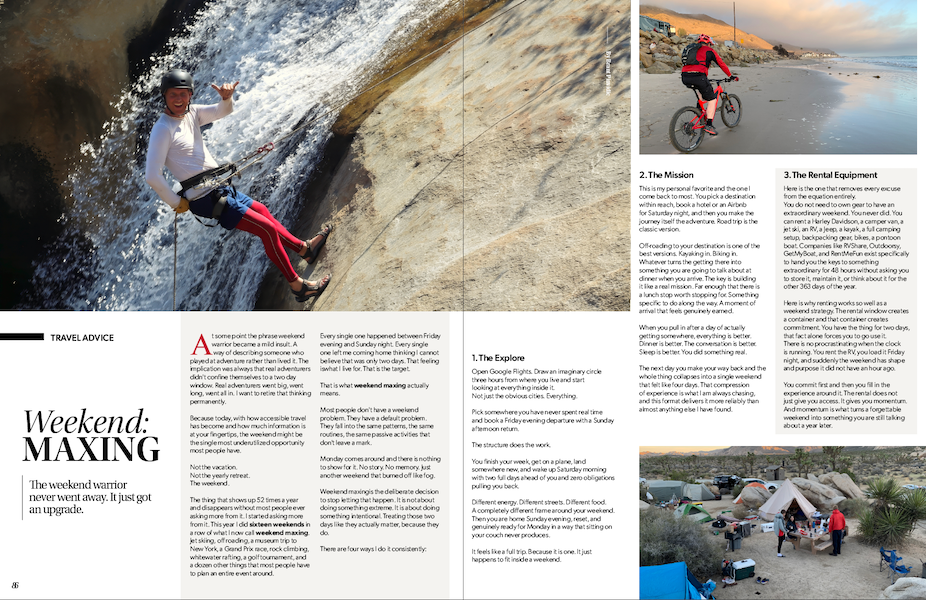
Weekend Maxing
Invitation Creates Motivation

Get The Whole Story!
Read all the complete articles, get every issue directly delivered to your door, or online to your device. Welcome to Reject Average Travel and Adventure Magazine.
Subscribe now and get:
-
Quarterly issues delivered to your door
-
The complete 52-week travel breakdown
-
Exclusive member travel deals and experiences
-
Access to curated adventure guides
